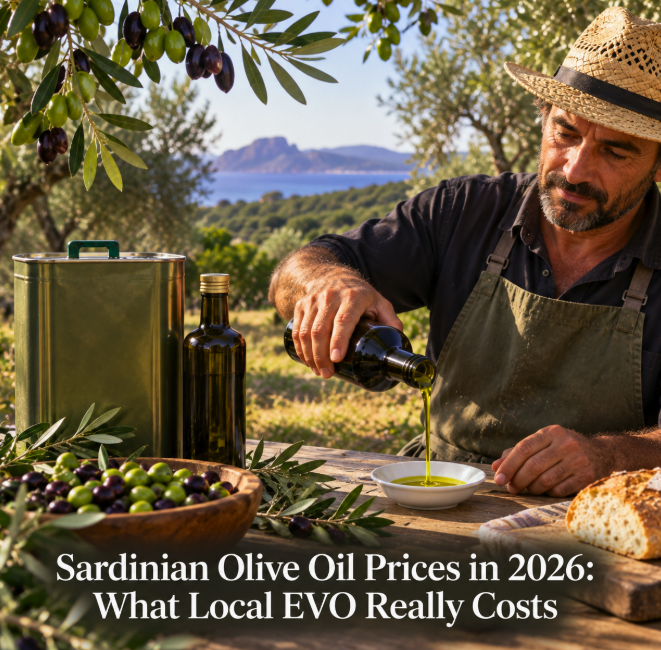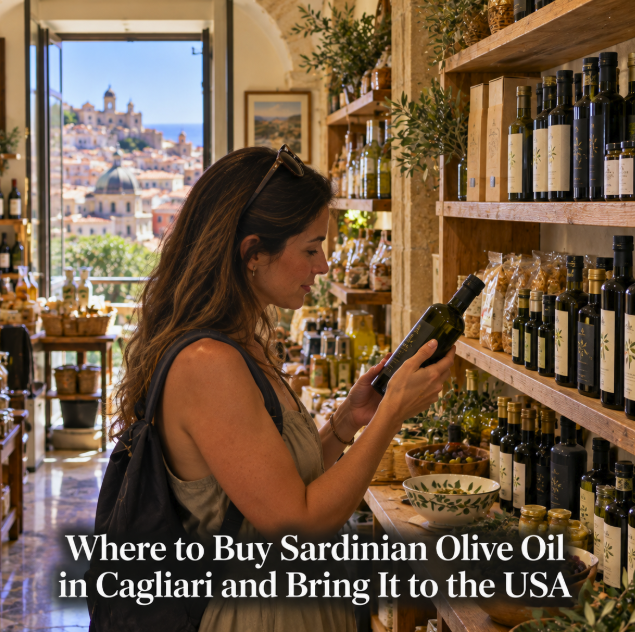
A bottle of Sardinian extra virgin olive oil is one of the easiest edible souvenirs to understand once you are back home: it is genuinely local, useful in the kitchen and small enough to fit in a suitcase. In Cagliari, travelers can choose between specialist producers, central shops selling Sardinian foods and bottles made from island cultivars such as Bosana, Semidana and Tonda di Cagliari. If the oil is going back to the United States, packaging and bottle size matter almost as much as flavor.
There is no objective single “best” olive oil shop in Cagliari, but several current options are particularly useful depending on whether you want a producer-direct bottle, a central store that is easy to reach on foot or a travel-size format.
Biancospino Agricola: producer-direct pickup in Cagliari
Biancospino Agricola is a useful option for travelers who prefer buying directly from an agricultural producer rather than choosing from a generic souvenir shelf. Its current online store offers extra virgin olive oil produced from hillside olive groves in the Montiferru area of Sardinia, with 250 ml and 500 ml formats.
The company currently offers pickup from its Cagliari location at Via Antonio Michele Gazano 1. The 250 ml format is especially practical for travelers because it is compact enough to protect easily inside checked luggage while still providing a useful quantity once home.
Biancospino describes the oil as having persistent notes of artichoke and fresh grass. Those green, vegetal notes are a useful clue when tasting Sardinian EVOO: good oil can be noticeably bitter or peppery rather than simply mild and buttery.
Casa Bonaria: Sardinian cultivars and a 100 ml option
Casa Bonaria is another particularly interesting choice because its current extra virgin olive oil is made from three varieties associated with Sardinia: Tonda di Cagliari, Bosana and Semidana.
The olives are harvested directly from the tree early in ripening and processed in a modern continuous cold system, according to the producer. Current bottle formats are 100 ml, 250 ml and 750 ml, with prices ranging from €5.50 to €17 depending on size.
For an American traveler, the 100 ml bottle is notable. The U.S. Transportation Security Administration currently applies the familiar 3.4-ounce/100 ml limit to liquids in carry-on baggage. A bottle larger than that belongs in checked baggage unless it qualifies for a specific duty-free security exception.
Casa Bonaria's registered base is at Via Ciusa 16 in Cagliari, while its public shop is in Pula at Via Nora 123. Travelers should therefore contact the business before heading to Via Ciusa expecting a conventional walk-in retail store. Its current website also sells the oil online.
Sapori di Sardegna: convenient for central sightseeing
For visitors who want to buy olive oil while walking around central Cagliari rather than making a dedicated producer visit, Sapori di Sardegna is a practical stop. The current store is at Vico dei Mille 1, near the Marina district and waterfront.
It is a general Sardinian food shop rather than an olive-oil-only producer, so the advantage is selection and convenience. Travelers can browse oil alongside other island products and compare bottles in person.
Current business information lists daily opening, including Sundays, which can be useful for travelers whose final day in Cagliari falls on a weekend. Product inventory changes, so anyone looking for a particular cultivar or bottle size should ask what is available that day.
ALIMENTUV and Sardissimo: central alternatives
ALIMENTUV Speciality Grocery Store on Via Giuseppe Manno is another central shop focused on Sardinian products. Its location on one of Cagliari's principal pedestrian shopping streets makes it particularly easy to incorporate into a day in the historic center.
SARDISSIMO on Via Giovanni Maria Dettori is a gourmet shop specializing in typical Sardinian products and is another useful option for comparing local food souvenirs without leaving central Cagliari.
At either shop, ask specifically for olio extravergine di oliva sardo and, if you want to explore the island's olive culture more deeply, ask which cultivar or production area is represented. A knowledgeable shop may have oils that taste quite different from one another.
If you have a car: buy at the source near Cagliari
Travelers with a rental car can widen the search beyond the city. Olio del Tempio in Dolianova is a dedicated olive oil producer with direct sales, around the wine-and-olive-growing countryside north of Cagliari.
Another agricultural producer, Cannavera, currently sells directly from its farm in Dolianova and also advertises home delivery in Cagliari and the surrounding area. Its mill uses a modern continuous cold-processing system.
A producer visit is useful if olive oil is more than a last-minute souvenir. You can ask about harvest timing, olive varieties, filtration, storage and the differences between oils rather than simply choosing a bottle by label design.
Can you bring olive oil back to the United States?
For an ordinary traveler, the main practical issue is how the oil is packed for the flight. Olive oil is a liquid, so TSA rules apply at U.S. airport security checkpoints. Containers over 3.4 ounces or 100 ml should normally travel in checked baggage rather than in a carry-on.
A 100 ml bottle can fit within the carry-on liquids limit, provided it is placed with the other permitted liquids in the required bag. Larger 250 ml, 500 ml and 750 ml bottles are better packed in checked luggage.
Customs rules are separate from airport security. Travelers entering the United States should declare agricultural and food products when required and follow the instructions of U.S. Customs and Border Protection at the port of entry. Rules can change, so travelers with unusual quantities or commercial intentions should verify current U.S. requirements before flying.
A couple of sealed retail bottles for personal use is a very different situation from importing a case for resale. This guide is about normal travel purchases, not commercial importation.
How to pack olive oil without ruining your suitcase
Keep the bottle factory sealed. If the shop offers a protective box, padded sleeve or travel packaging, use it.
For checked luggage, place the bottle inside a sealed plastic bag before wrapping it in soft clothing. Position it in the middle of the suitcase, away from hard edges, shoes and the outer shell. A rigid bottle protector is even better if you routinely travel with wine or oil.
Dark glass is good for protecting olive oil from light, but glass obviously requires more care in baggage. Metal tins are less vulnerable to breakage and can make sense for larger quantities, although a five-liter container is excessive for most vacationers and adds substantial weight.
Do not open the bottle for a tasting after purchase if it is intended for the flight home. A sealed, labeled retail product is easier to transport and identify.
What should you look for on the label?
Start with the words olio extra vergine di oliva. Then look for origin information, producer, harvest or best-before details and the bottle size.
If you want something specifically Sardinian rather than simply purchased in Sardinia, read the origin carefully. Ask whether the olives were grown on the island and which cultivars were used.
Bosana is strongly associated with Sardinian olive growing, while Semidana and Tonda di Cagliari are also important local varieties. Casa Bonaria's current oil is an accessible example combining all three.
Do not assume that the most expensive bottle is automatically the one you will enjoy most. Some oils are intensely grassy, bitter and peppery; others are more delicate. If tasting is available, use it.
Which Cagliari option makes the most sense?
For a traveler who wants a producer-direct bottle with convenient Cagliari pickup, Biancospino Agricola is a strong starting point. For a particularly travel-friendly 100 ml format and an oil made from named Sardinian cultivars, Casa Bonaria is worth investigating, although its actual retail shop is in Pula and the Cagliari address should be confirmed before visiting.
For travelers staying in the historic center without a car, Sapori di Sardegna, ALIMENTUV and Sardissimo are easier places to browse while sightseeing. If you have a rental car and want to turn olive oil into part of the trip rather than just a purchase, the countryside around Dolianova offers direct-producer options.
Whatever you choose, buy oil you intend to use rather than a decorative bottle destined for a shelf. A good Sardinian EVOO poured over bread, tomatoes or vegetables after you return home is one of the simplest ways to bring the flavor of the island back from Cagliari.