Gorropu Canyon is one of the most dramatic hiking destinations in Sardinia’s Supramonte, but it is not a simple roadside viewpoint. Reaching the gorge means walking through rugged limestone country, and the amount of effort depends heavily on the route chosen. For international visitors looking for an English-speaking guide, the good news is that the official Gorropu organization offers guided excursions in the canyon and wider Supramonte, with an English-language website and direct booking information.
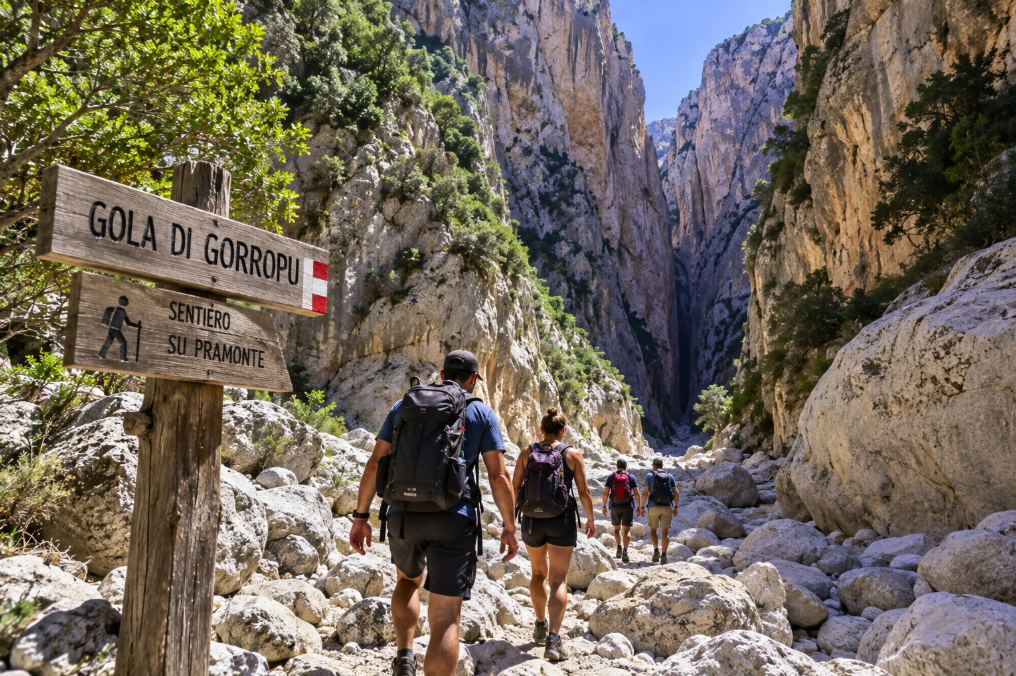
The gorge forms a natural boundary between the territories of Urzulei and Orgosolo. According to the official Gorropu site, the canyon runs for roughly 1.5 kilometres and cuts about 500 metres into the surrounding landscape, narrowing in places to only four or five metres. Its walls and boulder-filled floor are the result of water from the Gennargentu area flowing through the Flumineddu system and gradually eroding the Supramonte’s carbonate rock.
Choose the route before you choose the hike
There is more than one way to experience Gorropu. The official concessionaire, Chìntula, currently presents several approaches ranging from an easier option starting from the Gorropu Base Camp to a panoramic route from Ghenna Silana and a more demanding integral itinerary. A longer approach is also possible from Ponte s’Abba Arva in the Dorgali area.
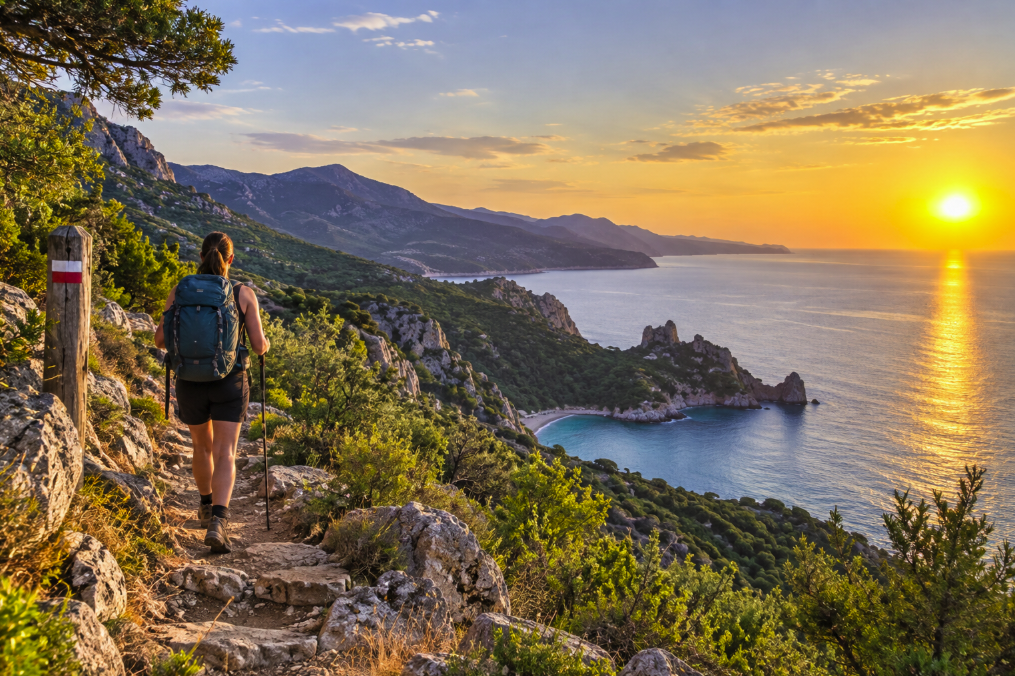
The panoramic Ghenna Silana route is the classic choice for hikers who want the journey to be part of the experience rather than simply reaching the canyon as quickly as possible. It crosses the limestone Supramonte landscape and adds botanical and historical context to the physical challenge. The important catch is obvious once you look at the terrain: a descent into the gorge also means dealing with the return, unless the excursion has been organized with a transfer.
Travelers who want a less demanding day can start from the Gorropu Base Camp area on the SS125. The official site describes access via Su Monte Orrubiu and an easier path along the Rio Flumineddu, with the gorge reachable in about 45 minutes on foot from that lower starting area. Off-road transfers are available from the Base Camp and other points, and a return transfer to the parking area can be arranged during canyon opening hours.
Current Gorropu opening hours and entrance fee
As of September 2026, the official Gorropu site says the canyon is open daily for entry from 10 a.m. until 4:30 p.m., with all visitors required to leave by 5 p.m. The entrance ticket is €6 for adults and €4 for visitors aged 6 to 17.
One practical detail is easy to miss when planning online: the canyon entrance ticket itself cannot currently be reserved in advance. It is sold exclusively at the information point and ticket office at the canyon entrance, and the official site states that payment is cash only. Guided excursions and logistical services are a separate matter and can be arranged with the operator.
Chìntula says Gorropu is normally visitable through most of the hiking season, approximately from mid-March to mid-November. It discourages visits in the other months because adverse weather can increase rockfall risk, daylight is shorter and services may be incomplete or unavailable. Weather can change conditions at any time of year, so checking before setting out is essential.
Do you need a guide?
Not for every Gorropu itinerary. The official site explicitly offers hiking at different difficulty levels both with and without a guide. Experienced hikers who have researched the route, carry suitable equipment and understand the day's conditions may choose an independent visit.
A guide becomes much more valuable when Gorropu is part of a deeper Supramonte experience. This is a karst landscape of limestone plateaus, ravines and limited obvious landmarks, and some routes are significantly more demanding than the straightforward canyon visit. Chìntula, the official concessionaire responsible for the management and enhancement of Gorropu, specializes in trekking, off-road tours, canyoning and excursions throughout the Supramonte and advertises expert guides and customized outings.
For English-speaking travelers, contact the guide or operator before booking and explicitly request an excursion conducted in English. An English-language booking page does not automatically guarantee that every departure on every date has an English-speaking guide, especially for small-group or specialist routes. Confirm the language, meeting point, duration, difficulty, included transfer and required equipment in writing.
What to bring into the Supramonte
Gorropu should be treated as a mountain hike rather than a casual beach excursion. Footwear with reliable grip is important because the canyon floor includes uneven limestone and large rocks. Carry enough water for the full route, sun protection, food appropriate to the duration and a layer for changing conditions. The heat outside the gorge and shade inside it can create noticeably different temperatures.
Do not plan the day solely around distance. Elevation change, rocky terrain and the time needed to negotiate the canyon can make a relatively short route more tiring than its map length suggests. Families and mixed-ability groups should select the itinerary according to the least experienced hiker rather than the strongest person in the group.
The Gorropu Base Camp on the SS125 is useful for information and logistics. The official organization lists an information point, customized excursions, equipment rental, picnic facilities and transfers. It is also a practical place to ask about current trail and weather conditions before committing to a route.
Gorropu is only one doorway into the Supramonte
Visitors often search for Gorropu as a single attraction, but the gorge sits inside a much larger landscape extending across the territories of communities including Urzulei, Orgosolo, Oliena and Dorgali. The Supramonte is characterized by limestone and dolomite plateaus, forests, karst formations and extensive underground water systems. Archaeological remains, old pastoral routes and isolated nuraghi add a human history to what can initially look like pure wilderness.
This is where a guided day can offer more than navigation. A local guide can explain the geology, endemic plants, pastoral culture and archaeological traces that are easy to walk past without recognizing. For travelers from the United States looking for an outdoor experience that goes beyond Sardinia’s beaches, a Supramonte excursion provides a very different view of the island.
The best plan is to decide first how strenuous the day should be, then match that to the appropriate Gorropu approach. Independent hikers can use the official information and current access rules, while travelers wanting a longer or more interpretive Supramonte trek should arrange a guide in advance and confirm English-language availability. Either way, the canyon rewards preparation: Gorropu is spectacular precisely because reaching it still feels like entering a mountain landscape rather than visiting a conventional tourist attraction.