Cagliari’s National Archaeological Museum is open every day from 8:30 to 19:30, with the ticket office closing at 18:45. The standard 2026 admission is €10 for a combined ticket covering the Archaeological Museum and the National Art Gallery, while a reduced ticket costs €5. For anyone trying to understand Sardinia beyond its beaches, it is one of the most useful places to spend a few hours in the capital.
The museum is in the Cittadella dei Musei at Piazza Arsenale 1, in Cagliari’s historic Castello district. Its collection contains more than 4,000 objects spanning almost 7,000 years, from prehistory and the Nuragic world to Phoenician, Punic, Roman and Byzantine Sardinia.
2026 ticket prices
The official Musei Nazionali di Cagliari ticket page currently lists the combined Archaeological Museum and Pinacoteca ticket at €10 full price and €5 reduced.
Visitors under 18 can enter Italian state museums free of charge under the national admission rules. EU citizens aged 18 to 24 pay €2. The same €2 concession can apply to citizens of certain non-EU countries where reciprocity rules are recognized, including Switzerland, Norway, Iceland and Liechtenstein.
That distinction matters for American visitors: a US traveler aged 18–24 should not assume the €2 EU youth rate applies simply because of age. Unless another free or reduced category applies, plan around the normal admission price.
The museum also offers a personal annual pass for the Archaeological Museum and Pinacoteca at €36, valid for 365 days from activation.
Opening hours
The current official schedule is refreshingly simple: Monday through Sunday, 8:30–19:30. The ticket office operates from 8:30 until 18:45.
Seven-day opening makes the museum particularly useful when building a Cagliari itinerary because there is no standard Monday closure to work around. However, temporary changes can occur for exhibition installation, maintenance, holidays or special events. The museum has announced short-term schedule changes during 2026, so checking the official site on the morning of a visit remains sensible.
If you want a quieter experience, arriving relatively early can also make it easier to spend time with the smaller bronzes and detailed archaeological objects without moving through the galleries with a larger group.
Can you buy tickets online?
Yes. The museum's official e-ticketing service uses the Italian Ministry of Culture's Musei Italiani platform. Tickets can be purchased through the Musei Italiani app or the Ministry's online portal.
Buying online is convenient if the museum is a fixed part of your day, but individual visitors do not need to treat this like a famous attraction where tickets routinely disappear months ahead. Guided visits and organized groups are a different matter and can require reservations.
The museum currently states that guided tours are available by reservation. Groups must book in advance through the museum's reservation service.
What is inside?
The museum calls itself Sardinia's most important archaeological museum, and the breadth of the collection explains why. More than 4,000 objects trace almost seven millennia of island history.
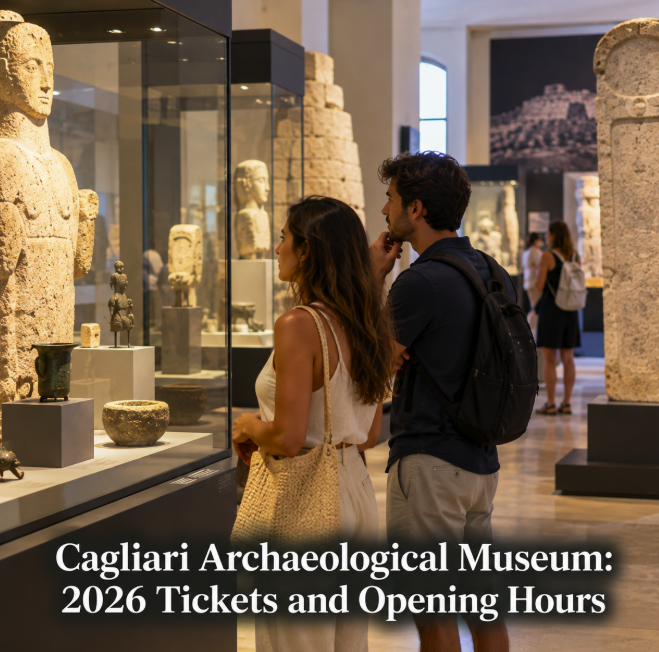
For many visitors, the Nuragic material is the highlight. The collection includes the small bronze figures known as bronzetti, which offer extraordinary glimpses of warriors, chiefs, animals, boats and ritual life from ancient Sardinia.
The museum also follows the island through its long connections with the Mediterranean. Phoenician and Punic jewelry and objects show Sardinia's place in wider trade and cultural networks, while Roman sculpture and later Byzantine material continue the story into subsequent centuries.
This makes the museum especially valuable before visiting archaeological sites elsewhere on the island. A nuraghe, sacred well or Punic site can make much more sense after seeing the objects and chronology presented in Cagliari.
What about the Giants of Mont’e Prama?
The stone sculptures from Mont’e Prama are among the most famous archaeological discoveries associated with Sardinia, but travelers should not assume that every major figure is permanently displayed in Cagliari at all times. Exhibitions and loans can change.
The museum's current homepage notes activity involving the Mont’e Prama sculptural complex and the museum at Cabras. If seeing a particular statue is the main reason for your visit, check the museum's current exhibition notices rather than relying on an old photograph or guidebook.
Cabras, on the Sinis Peninsula, remains another essential destination for travelers specifically interested in Mont’e Prama and western Sardinian archaeology.
Where is the museum?
The address is Piazza Arsenale 1, 09124 Cagliari. It sits in the upper historic district of Castello within the Cittadella dei Musei, a museum complex created through the redevelopment of the former royal arsenal and medieval defensive structures.
If you are exploring central Cagliari on foot, combine the museum with Castello rather than treating it as an isolated stop. The district contains medieval streets, towers, viewpoints and historic buildings, and the elevated setting gives a very different impression of the city from the waterfront around Via Roma and the Marina quarter.
The climb is worth considering in summer heat. Comfortable shoes and water are useful, particularly if you are walking up from the lower city.
How much time should you allow?
Allow around two hours for a focused first visit. Archaeology enthusiasts can easily stay longer, especially if they read the displays carefully or combine the Archaeological Museum with the Pinacoteca included in the joint ticket.
A practical half-day plan is to visit the museum in the morning, continue through Castello, and then descend toward the Marina district for lunch. Alternatively, the long opening hours make the museum a good late-afternoon cultural stop after a morning at the beach.
Remember that the ticket office closes at 18:45, 45 minutes before the museum itself. Arriving close to that cutoff would leave very little time for a collection of this size.
Before you go
For 2026, the essential numbers are easy to remember: €10 standard combined admission, open 8:30–19:30 every day, ticket office until 18:45. Online tickets are available through the Ministry of Culture's Musei Italiani system, and guided visits can be arranged by reservation.
Check the official museum website immediately before visiting for temporary closures, exhibition changes or special free-entry initiatives. Italy's state museums periodically hold free-admission days and other national cultural events, but those should be verified for the specific date rather than assumed.
Even at the full €10 price, the museum offers something that a beach itinerary cannot: a compact introduction to why Sardinia looks and feels so distinct from the rest of Italy. Seeing its prehistoric figurines, Nuragic bronzes and Mediterranean-era objects in Cagliari provides context for archaeological landscapes encountered across the island.