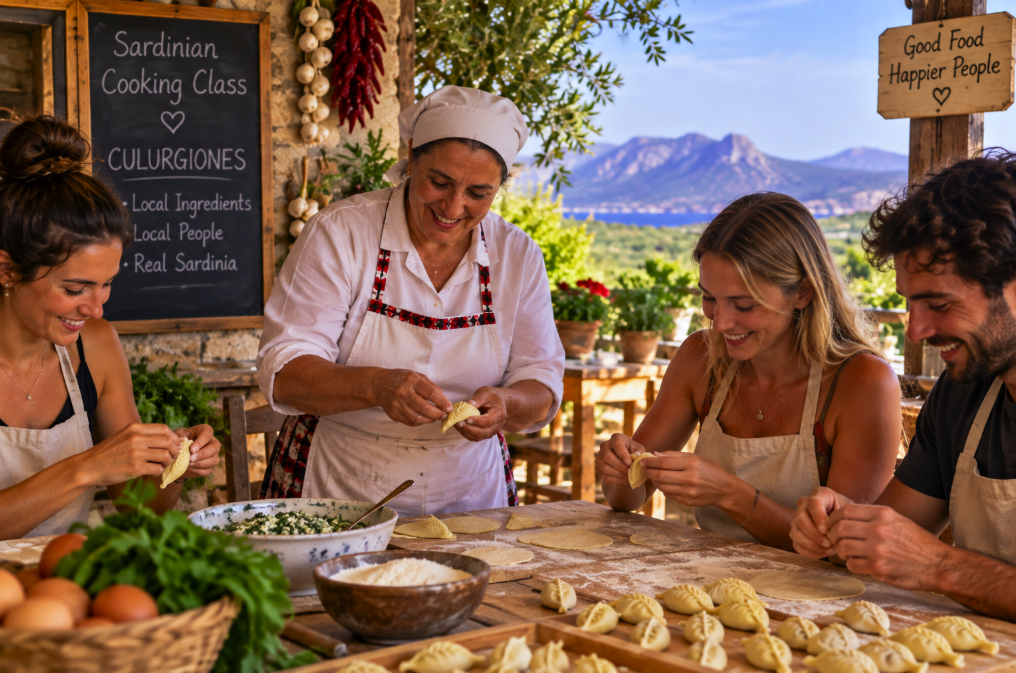
For travelers who want to bring something home from Sardinia beyond photographs, Olbia now has several hands-on cooking experiences centered on the island’s fresh pasta traditions. Current workshops teach visitors to shape malloreddus, ravioli and, most memorably, culurgiones — the filled pasta from Ogliastra closed by hand with its distinctive wheat-ear pattern. English-language options are available, and current prices around Olbia start at roughly €85–€120 per person for standard pasta workshops.
That makes a cooking class particularly practical for U.S. travelers using Olbia as their gateway to Costa Smeralda and northeast Sardinia. Instead of treating the city only as an airport stop, you can spend a half day learning a technique that is genuinely difficult to reproduce by watching a video: the spighitta, the pinched closure that gives culurgiones their unmistakable shape.
What do you actually make in an Olbia pasta class?
A current traditional pasta workshop in Olbia runs for about four hours and combines roughly two and a half hours of hands-on preparation with a tasting of what the group has made. The published program includes malloreddus, culurgiones and ravioli, with fillings that can change according to season.
The class is offered in Italian and English, has a minimum age of six and accepts groups of up to 15 people. The current direct booking price is €101 per person, while the same or closely related experience appears through other booking channels at different prices. One current operator listing shows €85 per person, and a recent GetYourGuide-linked listing starts around $114. This is a good reminder to compare the exact date, inclusions and cancellation conditions rather than assuming every marketplace is selling an identical package at the same rate.
After the pasta-making session, participants eat the dishes they have prepared. Current descriptions include water, wine, seasonal fruit, typical Sardinian sweets and coffee as part of the tasting. Vegetarian and lactose-free alternatives can be arranged with advance notice, while the standard workshop is explicitly described as unsuitable for people with celiac disease.
Why culurgiones are more than Sardinian ravioli
Culurgiones are strongly associated with Ogliastra, on Sardinia’s central-eastern side. The protected Culurgionis d’Ogliastra IGP specification defines them as fresh filled pasta with the characteristic hand closure resembling an ear of wheat.
The protected version uses a filling dominated by potatoes, with Sardinian cheeses and permitted aromatic ingredients that can include mint, basil, garlic or onion depending on the local tradition. That combination is only half the challenge. The real test for beginners is closing each piece of pasta by pinching the dough alternately between the fingers until a braided seam runs across the top.
A cooking class makes sense because this is tactile knowledge. An instructor can correct how much filling you use, the thickness of the dough and the angle of each pinch in real time. The first culurgione may look slightly alarming; by the fifth or sixth, the movement usually begins to make sense.
A vineyard version near Olbia
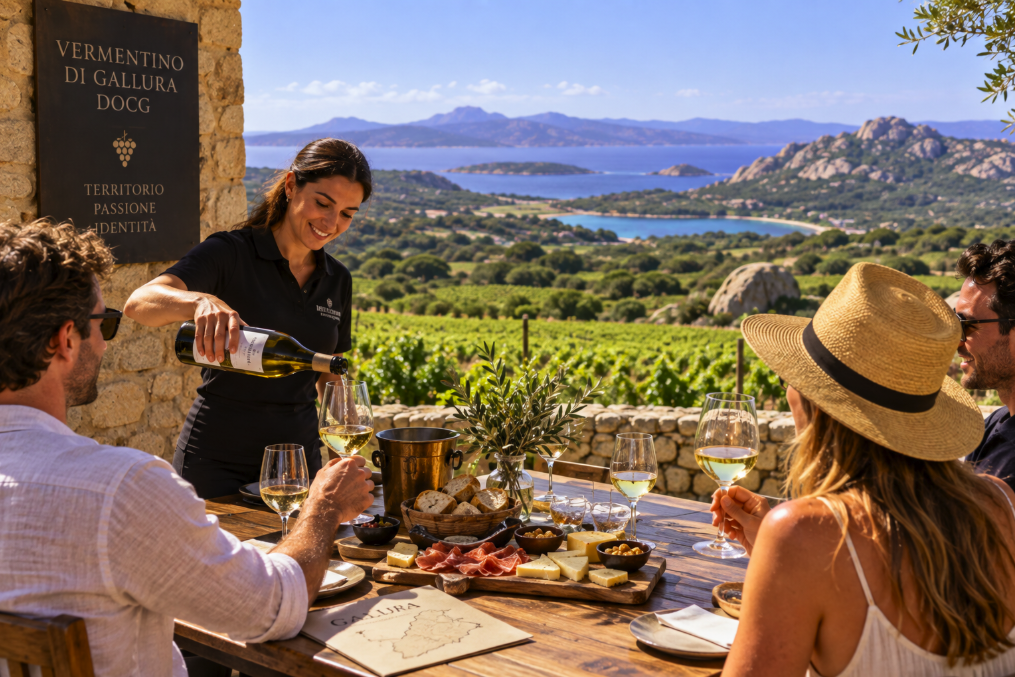
Travelers who want to combine cooking with wine can choose a current pasta workshop at Cantina Murales in the Olbia countryside. Its Sardinian Pasta Wine Edition starts at €120 per person and takes place among the estate’s vineyards.
The workshop includes traditional pasta shapes such as malloreddus and Ogliastra-style culurgiones, followed by the food prepared during the session with wine from the estate. This version is especially convenient for couples or small groups who already planned to visit a Gallura winery and would rather turn the tasting into a longer food experience.
A more elaborate Platinum edition currently starts at €200 per person. It expands the program to include malloreddus, culurgiones and seadas, followed by a fuller traditional lunch with two glasses of wine and a visit around the estate.
Because wine is part of these experiences, anyone driving should plan accordingly. A designated driver or arranged transfer is preferable to building a wine-focused afternoon around a rental car.
Is this really the number-one U.S. experience on GetYourGuide?
There is clear evidence that culurgiones and Sardinian pasta workshops are actively sold to international travelers on major booking platforms, including GetYourGuide. A current Olbia workshop linked to GetYourGuide has dozens of reviews and offers English instruction.
What is not publicly verifiable is the claim that “learn to make culurgiones” is currently the single most-booked Sardinian experience among U.S. customers on GetYourGuide. Marketplace rankings can change by date, user location and personalization, and public listings do not provide enough nationality-specific booking data to support that statistic.
The underlying trend is still credible without exaggerating it. Cooking classes fit the growing demand for experiences where travelers participate rather than simply observe, and culurgiones offer exactly the kind of skill that connects food with a specific Sardinian place and tradition.
How to choose the right cooking class
Start with location. If you are staying in Olbia without a car, a city-based workshop is easier than an estate outside town. If you are already exploring Gallura by car and want wine as part of the day, a vineyard class may be worth the additional cost.
Next, check what “cooking class” means. Some experiences focus almost entirely on pasta; others add lunch, wine, desserts or a farm visit. A four-hour class that ends with a meal can effectively replace dinner, which makes the price easier to evaluate.
Language matters too. Current Olbia options include English, but confirm the language for your specific date rather than assuming every instructor is bilingual. Travelers with food allergies or intolerances should contact the operator before booking, particularly because fresh pasta workshops use flour, dairy and other ingredients in shared preparation spaces.
Finally, do not choose only by the prettiest photograph. Small groups generally provide more opportunities for an instructor to correct your technique, which matters when everyone is trying to master the culurgiones closure at the same time.
A useful rainy-day experience — but not only that
A cooking class is an obvious backup when the weather is poor, but treating it only as a rainy-day activity undersells it. Sardinian food makes more sense when someone explains why a pasta belongs to Ogliastra, why malloreddus have their ridged shape, or how recipes change between families and regions.
Olbia is particularly useful because visitors can fit that cultural experience into a beach-heavy Costa Smeralda itinerary without making a long journey across the island. You can swim in the morning, spend the afternoon with flour on your hands and sit down to eat the pasta you just shaped.
For travelers searching “Sardinia cooking class near me” after landing in Olbia, the practical answer is that there are now several bookable choices. The best one depends on whether you want a straightforward city workshop, a vineyard setting or a longer lunch experience. Whichever format you choose, mastering even a slightly imperfect spighitta gives you a much more personal souvenir than anything sold at the airport.