October in Sardinia brings a quieter kind of travel experience: olive groves begin to move into harvest mode, nets appear beneath the trees and mills prepare for the new season’s oil. For visitors interested in food rather than beaches alone, joining a farm or producer during the olive harvest can offer a close look at one of the island’s oldest agricultural traditions — provided the experience is booked with a farm that genuinely welcomes visitors.
The timing is not identical across Sardinia. Harvest dates depend on cultivar, altitude, weather, fruit maturity and whether olives are intended for oil or the table. October can therefore be an excellent month to encounter harvesting activity, but visitors should confirm the actual picking dates directly with a producer instead of assuming every grove will be harvesting throughout the month.
October is when the olive season becomes visible
Official Sardinian agricultural records illustrate how October sits within the working olive calendar. Regional agricultural authorities have previously held table-olive harvesting trials in Parteolla on 15 October, while technical training for Sardinian olive-mill operators has covered post-harvest handling and milling from late October into November. These records do not establish one fixed island-wide harvest date, but they show why October and the following weeks are closely associated with harvesting and processing. citeturn0search0turn0search4
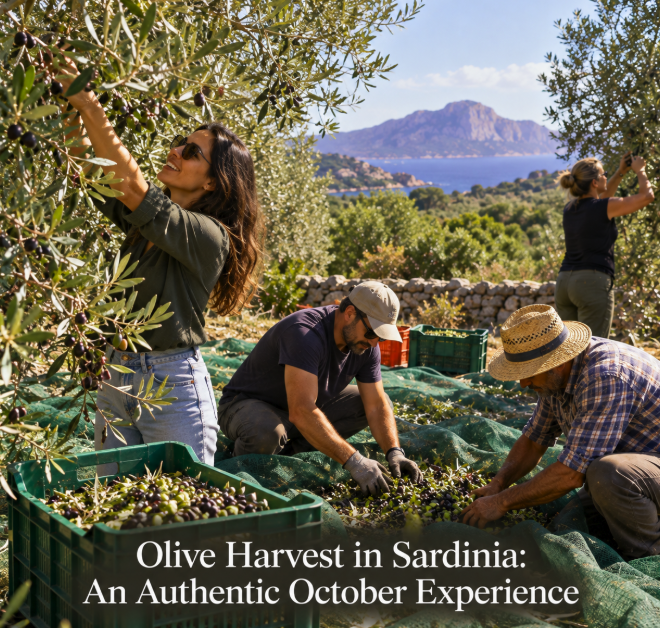
A harvest day may begin with nets spread beneath the trees. Depending on the farm, olives can be picked by hand, combed from branches with small tools or collected using mechanical equipment designed to shake or comb the fruit. The goal for quality oil is not simply to gather as many olives as possible: handling and the time between harvest and milling also influence the finished product.
Visitors should expect agricultural work rather than a staged photo opportunity. Uneven ground, dust, leaves, changing weather and repetitive picking are part of the experience. Closed shoes and comfortable clothes that can get dirty make more sense than resort wear.
From the grove to fresh extra-virgin olive oil
The most interesting harvest experiences continue beyond picking. At a working mill, olives are cleaned and washed before crushing; the resulting olive paste then passes through further stages that allow the oil to be separated. Sardinian agricultural training for mill operators specifically covers post-harvest transport and storage, defoliation, washing, crushing, malaxation, separation, storage and filtration — all steps that affect the quality of the final oil. citeturn0search4
Freshly produced oil can be surprisingly different from the bottle that has been sitting in a kitchen cupboard for months. Depending on variety and harvest stage, new oil may show intense green aromas together with bitterness and a peppery sensation in the throat. Those characteristics are not automatically flaws; they can be part of the sensory profile of high-quality extra-virgin olive oil.
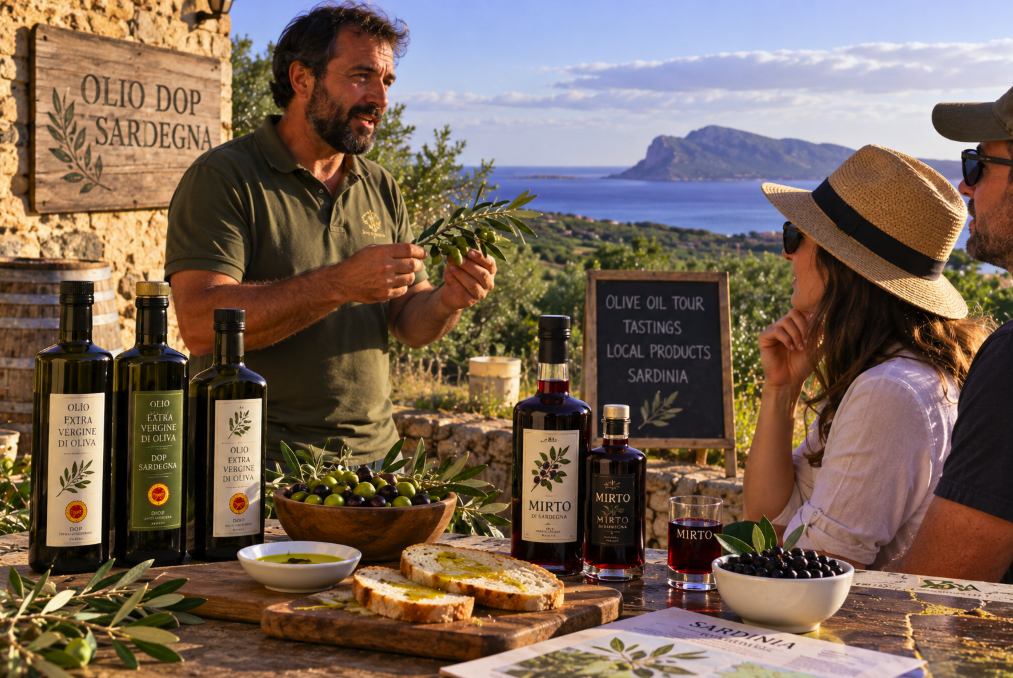
Sardinia’s protected designation provides a useful introduction to the island’s olive diversity. The official specification for Sardegna DOP extra-virgin olive oil requires at least 80% of the oil to come from Bosana, Tonda di Cagliari, Nera or Tonda di Villacidro, Semidana and their recognized synonyms. The remaining portion can come from other local varieties, subject to the production rules. The specification describes a fruity oil with bitter and pungent notes and color ranging from green to yellow as it evolves. citeturn0search2
Where olive culture is strongest
Olive trees grow across Sardinia, so harvest experiences are not limited to one corner of the island. Regional agricultural material identifies important olive-growing districts around Parteolla near Dolianova, the Monte Linas area around Gonnosfanadiga and Villacidro, and Sulcis in southern Sardinia. It also documents the importance of olive cultivation across the island more broadly. citeturn0search24
Northwestern Sardinia has its own strong olive identity, particularly around Sassari and Alghero, where Bosana is closely associated with local production. Elsewhere, the varieties and agricultural landscapes change, which is one reason tasting oils from several parts of Sardinia can be more interesting than looking for a single “typical” flavor.
For travelers based around Alghero, Cagliari, Oristano or the inland villages, the best option is often a nearby producer rather than a long drive to a famous estate. A small working farm that explains its own trees, harvest and oil can provide more context than a generic tasting.
How to find a genuine harvest experience
Not every olive farm is equipped or insured to receive tourists during active harvesting. Before visiting, contact an agriturismo, olive producer or mill and ask specifically whether guests can participate in the harvest on your dates. Clarify whether the activity includes picking, a mill visit, an olive-oil tasting or a meal, and whether English is available if that matters to your group.
Booking matters because agricultural schedules can change quickly. Rain, wind, fruit maturity and mill availability can move a planned harvest day. A producer may also harvest different plots on different dates, so an experience advertised for “October” should not be interpreted as daily guaranteed picking.
Families should ask about minimum ages and supervision before booking. Working groves may contain machinery, harvest tools, tractors and slippery nets, and an active olive mill is an industrial food-production environment rather than a museum.
Why autumn changes the Sardinian experience
The olive harvest is part of a broader seasonal shift. By October, Sardinia’s most intense summer tourism has eased, temperatures are generally more comfortable for countryside activities and food production becomes a more visible part of village life. The weather can also be less predictable than in midsummer, so flexible plans are useful.
For travelers, the attraction is the connection between landscape and food. An olive grove can look almost unchanged for decades, yet the harvest is intensely seasonal: fruit must be picked at the right stage and moved into processing. Seeing that process makes a bottle of Sardinian oil easier to understand.
It also offers a more grounded souvenir than simply buying a bottle at the airport. Taste the new oil at the mill or farm, ask which cultivar was used, and compare it with another local oil. If the producer sells directly, you can then take home something linked to the trees and people you have just encountered.
October is therefore a very good month to look for an olive-harvest experience in Sardinia, but it is not a fixed festival with guaranteed dates. Contact producers before traveling, leave room for agricultural schedules to change and choose an experience that genuinely connects the grove, the harvest and the mill. That uncertainty is part of what makes it a real autumn tradition rather than another packaged attraction.