Sardinia’s archaeology becomes much easier to understand once three names are connected: nuraghi, Giants’ Tombs and the Giants of Mont’e Prama. Together they reveal a society that built thousands of stone towers, buried communities in monumental collective tombs and, centuries later, created extraordinary life-size stone figures of warriors, archers and boxers. For culturally curious travelers, the Giovanni Marongiu Civic Museum in Cabras and the Sinis Peninsula offer one of the best places to start making sense of this ancient Sardinian world.
The Nuragic civilization developed during the Bronze Age and continued into the Iron Age, leaving a monumental landscape found nowhere else in the Mediterranean. Its most recognizable structures are the nuraghi: massive stone towers that can stand alone or form complex multi-tower settlements. Their exact functions varied and remain the subject of archaeological interpretation, but they were central landmarks within Nuragic communities rather than mysterious structures built by an unknown lost civilization.
What exactly is a nuraghe?
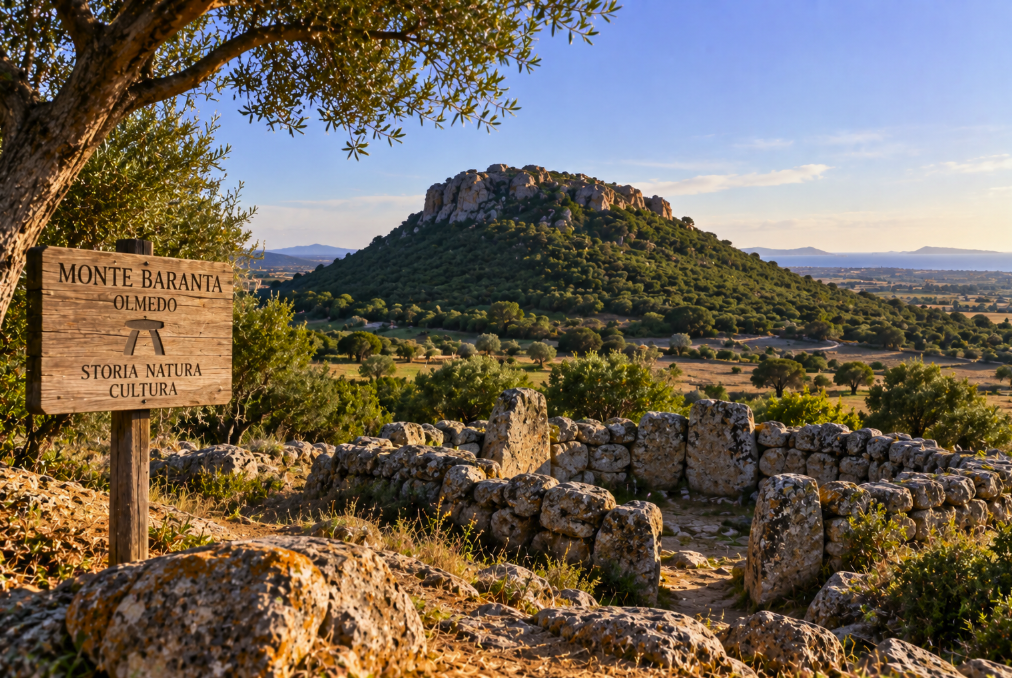
A nuraghe is a prehistoric stone building characteristic of Sardinia. Early corridor-type nuraghi appeared during the Middle Bronze Age, while the familiar tower forms with corbelled, or tholos, chambers developed later. Some remained relatively simple single towers; others evolved into elaborate complexes surrounded by settlements.
The scale of Nuragic construction is one reason these monuments define Sardinia’s cultural landscape. Visitors encounter them across the island, sometimes beside modern roads and villages and sometimes in isolated countryside. The best-preserved sites allow travelers to enter chambers, see the thickness of the masonry and understand how carefully enormous stones were arranged without mortar.
It is tempting to reduce every nuraghe to a fortress, temple or ruler’s residence, but archaeology does not support one universal explanation for every monument over every period. Their roles could change over centuries, and the larger complexes formed part of settlements with social, political and possibly ritual functions.
Giants’ Tombs did not contain actual giants
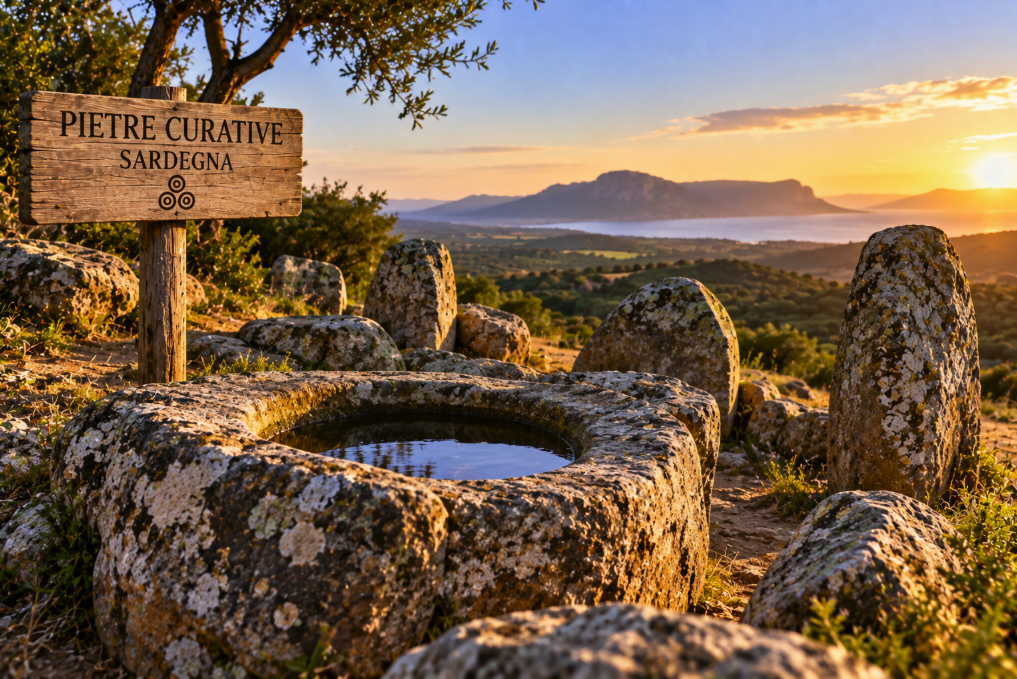
The dramatic name “Giants’ Tombs” comes from popular tradition, not from evidence that unusually large people were buried there. These were monumental collective funerary structures used by Nuragic communities from around the Middle Bronze Age. Sardegna Cultura dates this tradition broadly to approximately 1600–1150 BC.
The monuments typically have a long burial chamber and a curved ceremonial facade, or exedra. Some examples use large upright slabs with a prominent central stele, while later structures can be built from regular courses of stone. Their size helped inspire stories that they must have been graves for giants, but archaeological evidence instead points to collective burial practices.
Hundreds are known across Sardinia. For travelers, a Giants’ Tomb adds an important dimension to a nuraghe visit because it shows that Nuragic architecture was not only about towers and settlements. These communities also invested considerable effort in spaces connected with death, memory and collective ritual.
The Giants of Mont’e Prama changed the picture
The word “giants” appears again at Mont’e Prama, but this time it refers to monumental statues. The first fragments were discovered by chance in March 1974 when ploughing exposed sculpted stone near Cabras in western Sardinia. Excavations eventually revealed a remarkable complex associated with a necropolis of individual burials.
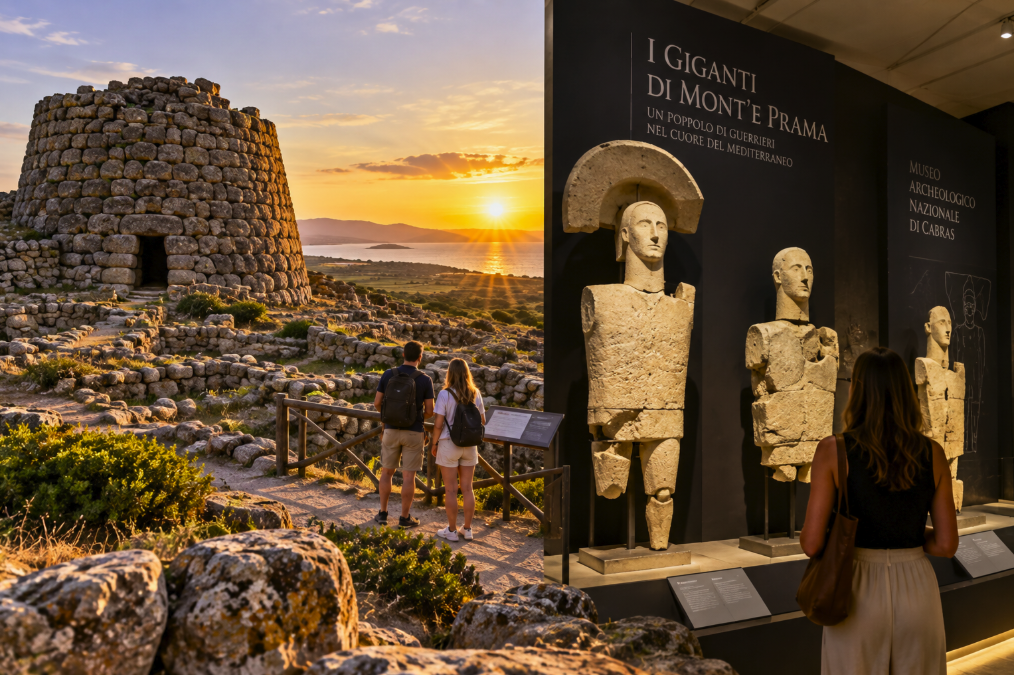
The sculptures represent boxers, archers and warriors, accompanied by stone models of nuraghi and betyls. Research at Mont’e Prama places the cultural development behind the complex between the final centuries of the Bronze Age and the Iron Age, with the site’s flourishing phase broadly around 950–730 BC. This makes the statues significantly later than the beginning of the Nuragic tower-building tradition and later than many classic Giants’ Tombs.
That chronology matters. Nuragic Sardinia was not a single frozen moment in prehistory. The society changed over centuries, and Mont’e Prama belongs to a later chapter in which monumental human figures and individual burials appear in a landscape already shaped by a long Nuragic tradition.
Where can you see the Giants of Mont’e Prama?
In 2026, the essential stop is the Giovanni Marongiu Civic Museum in Cabras. The museum has expanded its Mont’e Prama presentation with two new spaces, including the Sala del Paesaggio and the New Giants Room. Current information from the Mont’e Prama Foundation says the Sala del Paesaggio displays 25 statues, 15 models of nuraghi and a betyl together in one space, giving visitors an unusually powerful view of the sculptural complex.
The museum is not devoted only to the Giants. Its collections take visitors from the Neolithic remains of Cuccur’e Is Arrius through the Nuragic period and Mont’e Prama to material from Tharros and the cargo of the Mal di Ventre shipwreck. This chronological structure makes Cabras particularly useful for first-time visitors who want context rather than simply a photograph of the statues.
Online information about where the statues are displayed can lag behind museum changes, so travelers should check the current Mont’e Prama Foundation information before visiting. The Foundation’s updated Italian page reflects the expanded 2026 display at Cabras, while older English pages may still describe the previous distribution of sculptures between Cabras and Cagliari.
Turn Cabras into an archaeological day
Cabras sits beside the Sinis Peninsula, where several major sites can be combined without treating archaeology as an isolated museum visit. The Mont’e Prama archaeological area is where the sculptures and necropolis were found, while nearby Tharros preserves a much later city whose history includes Phoenician, Punic and Roman phases in a landscape already used during the Nuragic period.
The archaeological site of Mont’e Prama itself can have access restrictions depending on active research. Current official information should therefore be checked before planning a visit around the excavation area. Even when access conditions change, the Cabras museum remains the key place for seeing the sculptures and understanding their archaeological context.
For American visitors accustomed to classical itineraries centered on Rome, Pompeii or Greece, Nuragic Sardinia offers a very different Mediterranean story. The island’s great stone towers predate Rome by many centuries, its collective Giants’ Tombs belong to Bronze Age funerary traditions, and the statues of Mont’e Prama reveal a later society capable of monumental sculpture on an exceptional scale.
The most rewarding way to approach this heritage is not to search for a single “mystery of the nuraghi,” but to follow the chronology. Start with the towers and settlements, understand the collective tombs, then stand in front of the stone boxers, archers and warriors at Cabras. Sardinia’s ancient history becomes less mysterious — and considerably more interesting — when its monuments are seen as parts of a changing civilization rather than disconnected archaeological curiosities.