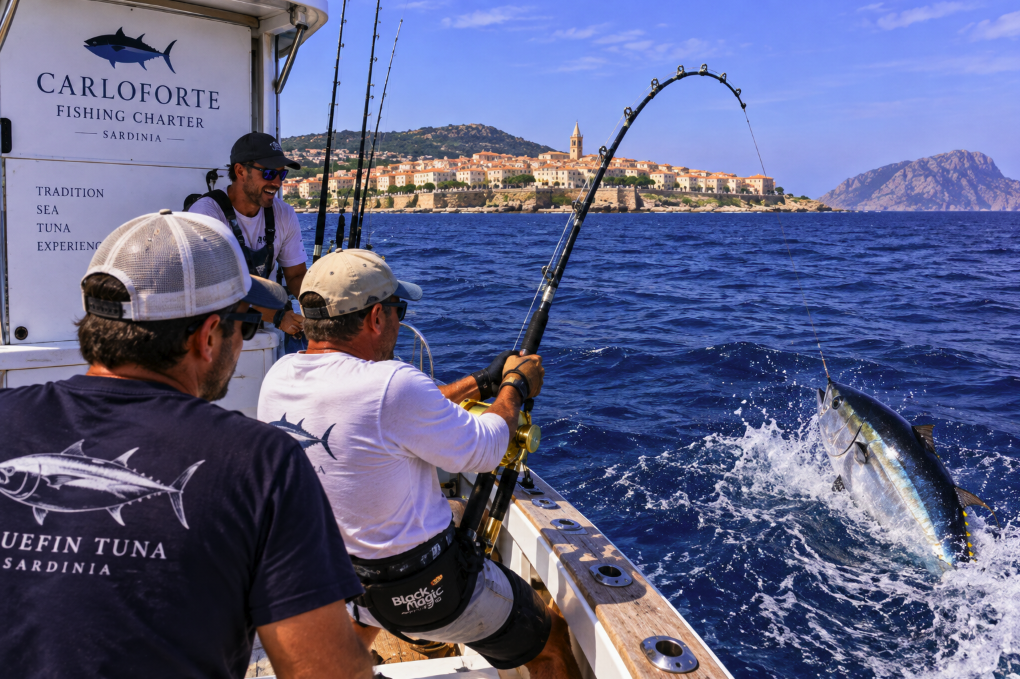
Carloforte is one of Sardinia’s most famous tuna destinations, and September can still attract anglers hoping to experience bluefin fishing off the island of San Pietro. But anyone booking a charter this month needs to know about a very recent rule change: from September 9, 2026, Italy has closed recreational and sport fishing for bluefin tuna when the fish is retained. Only catch-and-release bluefin fishing remains permitted under the applicable regulations.
That makes the distinction between “tuna fishing” and “bringing home a tuna” particularly important for American visitors. A September charter may still offer the excitement of targeting Atlantic bluefin tuna, but a legally caught fish cannot simply be kept because a guest wants it for dinner or photographs on the dock.
Why Carloforte is synonymous with tuna
Carloforte sits on San Pietro, a small island off Sardinia’s south-west coast. Tuna is far more than a sport-fishing species here: it is part of the island’s history, cuisine and maritime identity. The traditional tonnara system has operated around the island for centuries, taking advantage of the seasonal migration of Atlantic bluefin tuna through the Mediterranean.
Carloforte Tonnare describes a fixed system of nets close to the historic processing plant, reached by the traditional boats used for the fishery. This commercial and cultural tradition should not be confused with a tourist sport-fishing charter. The tonnara operates under a regulated professional fishery, while recreational anglers and charter guests are subject to different rules.
That distinction is useful when planning a trip. Carloforte is a compelling destination even if the day on the water is strictly catch-and-release, because tuna culture continues on land through local food, the tonnara tradition and restaurants where the fish is prepared in many different ways.
September 2026: bluefin is catch-and-release only
On September 8, Italy’s Ministry of Agriculture, Food Sovereignty and Forestry issued a specific decree for 2026 recreational and sport bluefin fishing. It states that retention of bluefin tuna closed at midnight on September 9. From that point, only catch-and-release activity remains allowed, in compliance with current law.
This is not a local Carloforte preference; it is a national fishing rule. A charter operator should therefore be able to explain how the trip is conducted under the current regulation and what happens when a bluefin is brought alongside the boat.
Italy also introduced new digital reporting requirements for recreational fishing in 2026. People over 16 who practise recreational or sport fishing from a pleasure craft are required to register through the RecFishing application, and catches of specified species — including Atlantic bluefin tuna — fall under digital reporting obligations. International guests should ask the charter operator before departure exactly which registration and reporting steps apply to them and what the operator handles on their behalf.
Bluefin is also subject to strict conservation rules at European and international level. The general minimum conservation reference size is 30 kilograms or 115 centimetres fork length, with specific derogations applying to defined fisheries. A tourist should never assume that landing a fish is legal simply because it has been hooked successfully.
What to ask before booking a charter
The most important question in September 2026 is straightforward: Is this a catch-and-release bluefin trip? If an operator promises that guests can retain a bluefin despite the September 9 closure, ask for the legal basis before paying a deposit.
Also confirm whether the quoted price is for the entire boat or per person, the maximum number of anglers, how many hours are included, whether tackle and bait are provided, and what happens if weather makes offshore fishing unsafe. Fuel may be included in one charter and charged separately in another, so the cheapest headline price is not always the cheapest final trip.
For American anglers, it is worth asking whether the skipper speaks English and whether the operator routinely hosts international guests. Discuss fishing experience as well. Fighting a large bluefin on heavy tackle can be physically demanding, and a good skipper should be able to adapt roles aboard the boat for beginners as well as experienced anglers.
Finally, check the vessel, insurance and commercial authorization. A paid fishing excursion is not the same thing as accepting an informal ride on a private boat. Current rules can change during a season, so the operator should be familiar with the latest national bluefin decree rather than relying on what was permitted earlier in the summer.
Is September really tuna season?
Carloforte’s historic tuna reputation is strongly associated with the traditional spring migration and tonnara fishery, but bluefin can be encountered in the wider Mediterranean outside that narrow traditional period. Sport-fishing opportunities depend on fish movements, sea conditions, regulations and the techniques used by local operators.
For that reason, it is too simplistic to promise that September automatically means guaranteed bluefin action. No responsible charter can guarantee a wild tuna. September can be an attractive period for fishing around south-west Sardinia, but the exact target species and technique should be confirmed with the skipper shortly before the trip.
This is particularly relevant in 2026 because the legal status changed during September itself. An article or charter advertisement written earlier in the season may still describe retention rules that are no longer valid after September 9.
Getting to Carloforte
Carloforte has no airport and is reached by ferry. Visitors normally travel to the ferry ports on Sardinia’s south-west coast and cross to San Pietro. For travelers arriving from the United States, Cagliari is the most practical major airport for this part of Sardinia, followed by an overland journey to the ferry.
It is wise to spend at least one night in Carloforte before an early fishing departure rather than trying to coordinate a long drive, ferry crossing and charter on the same morning. Building flexibility into the itinerary also gives the skipper room to react to wind and sea conditions.
Even if weather cancels a fishing day, Carloforte remains worthwhile for anyone interested in tuna culture. The town’s Ligurian-Tabarchine heritage, seafood cooking and historic connection with the tonnare give the trip a context that a generic offshore charter elsewhere cannot reproduce.
For September 2026, the key message is simple: Carloforte is still an excellent place to ask about a bluefin fishing experience, but sport and recreational bluefin fishing is currently catch-and-release only. Book with an operator who can explain the rules clearly, confirm the paperwork before boarding and treat a tuna encounter as a regulated wildlife experience rather than a guaranteed trophy to take home.