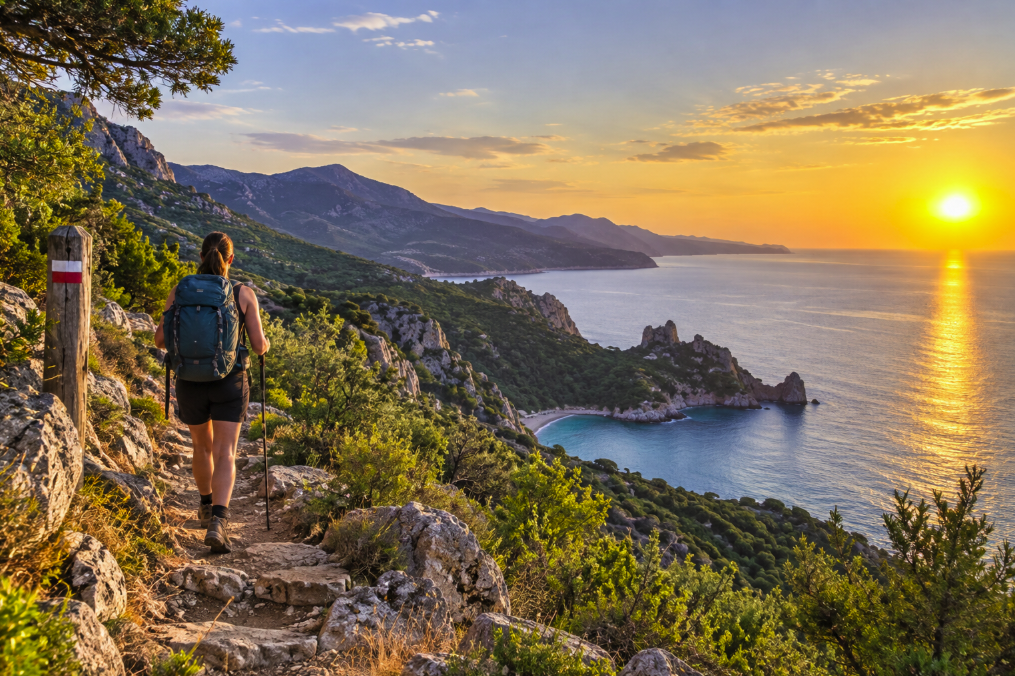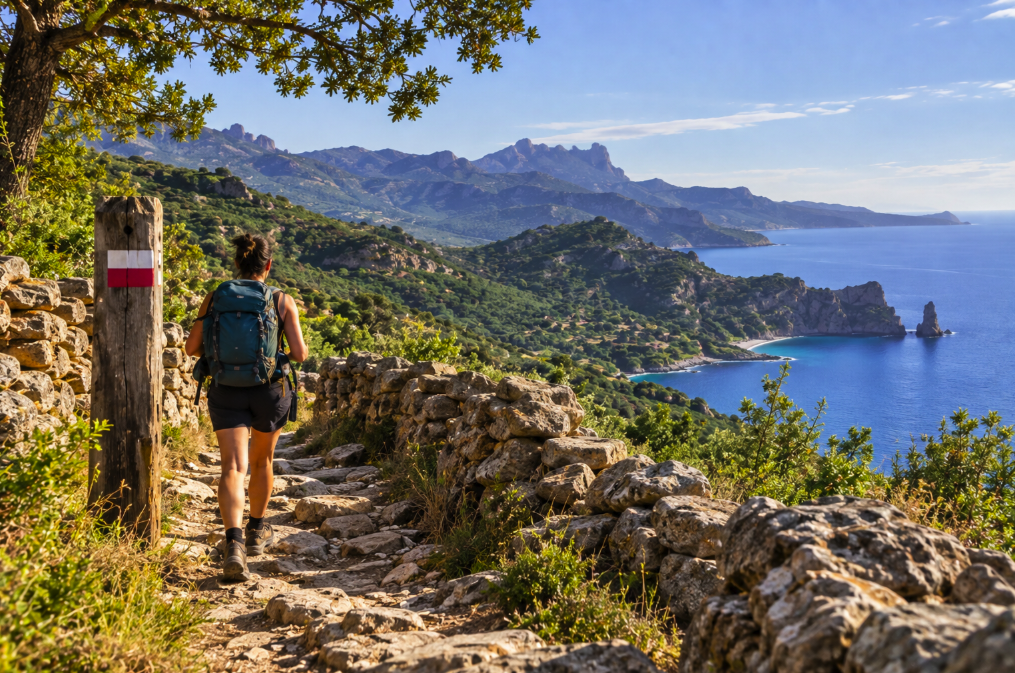
Sardinia is an island made for slow travel. Beyond its famous beaches, a network of long-distance walks and local trails crosses mining areas, ancient settlements, religious sites, forests and coastal landscapes.
Walking allows travelers to connect places that may seem unrelated on a normal road itinerary. A village, a nuraghe, an abandoned mine and a remote beach can become stages of the same journey.
Eight ways to experience the island on foot
Routes can be grouped into several experiences: historic mining paths in the south-west, religious and pilgrimage routes, trails through Barbagia and central Sardinia, coastal walks around major promontories, routes through Gallura’s granite landscapes, paths near archaeological sites, wetland and nature trails, and shorter village-to-village walks suitable for a day.
One of the best-known organized experiences is the Cammino Minerario di Santa Barbara, which crosses the mining landscapes of south-west Sardinia. Other routes use older paths that once connected rural settlements, sanctuaries and work areas.
Before you start
Sardinian trails can be remote. Carry enough water, protect yourself from the sun, check the weather and avoid assuming that every stage has shops or public transport. Spring and autumn are generally more comfortable than midsummer for long walks.
Walking in Sardinia is less about reaching a single famous attraction and more about understanding how landscape, history and local communities fit together.