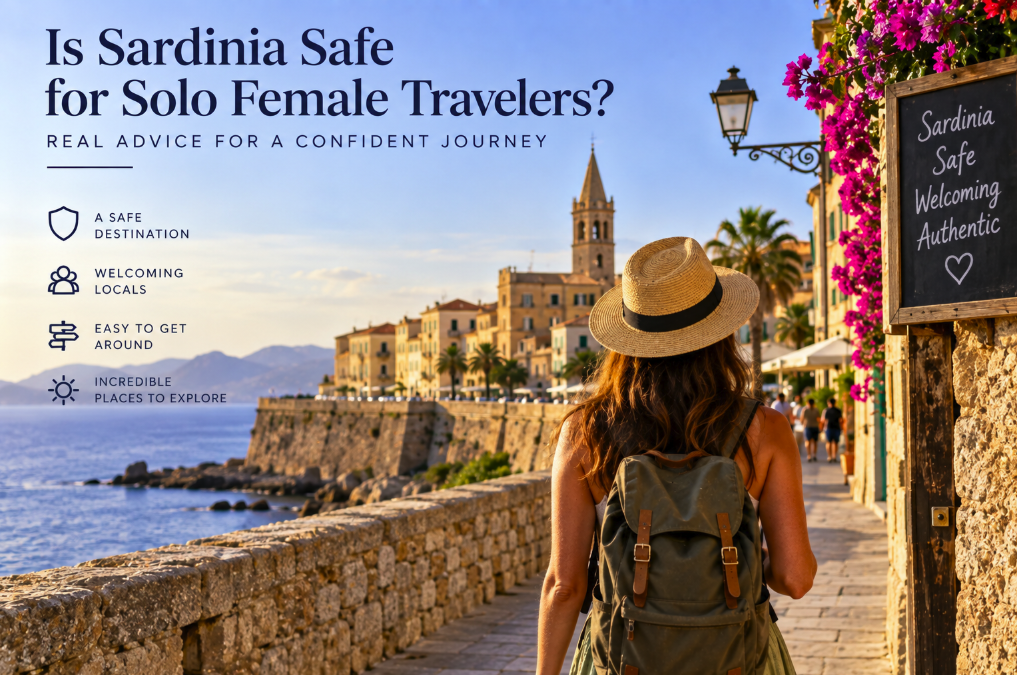
Sardinia remains a realistic destination for women traveling alone, including visitors from the United States, but “safe” should never be interpreted as risk-free. The most important update for September 2026 is that the U.S. Department of State has Italy at Level 2: Exercise Increased Caution because of terrorism. The advisory was updated on September 10, but Italy did not move to a higher warning level. The guidance applies nationally, including Sardinia; there is no separate U.S. travel advisory telling Americans to avoid the island.
The renewed warning has attracted U.S. media attention, including a Fox News report published on September 11. For a traveler deciding whether to cancel a Sardinia holiday, however, the wording and level of the official State Department advisory matter more than the headline. Level 2 means exercise increased caution, not “reconsider travel” or “do not travel.”
What the U.S. terrorism advisory actually says
The State Department says there is a risk of terrorist violence in Italy and that attacks can occur with little or no warning. Potential targets listed in U.S. guidance include tourist locations, transportation centers, markets, hotels, restaurants, religious sites, airports, parks and large public events.
Americans are advised to stay alert in tourist areas, follow local news, be prepared to adjust plans and enroll in the Smart Traveler Enrollment Program, or STEP, for messages from the U.S. Embassy. The State Department also has a worldwide caution in effect amid broader international tensions.
None of this is specific to solo women, and the current Italy advisory does not identify Sardinia as a special terrorism hotspot. It is country-level security guidance. A woman visiting Alghero, Cagliari or Olbia should take it seriously without treating it as evidence that Sardinia has suddenly become a no-go destination.
The more ordinary risks: theft, cars and late-night judgment
For most tourists, day-to-day precautions are likely to revolve around ordinary travel crime rather than terrorism. U.S. guidance for Italy warns that crimes against foreigners are often opportunistic, including purse snatching, pickpocketing and theft from cars.
Solo travelers should keep passports, phones and cards controlled in busy places, avoid leaving valuables visible in a rental car and be particularly attentive in transport hubs. A cross-body bag that closes securely is more useful than carrying everything in an open beach tote.
Rental cars deserve special attention in Sardinia because driving is one of the easiest ways to reach beaches, archaeological sites and rural areas. Do not leave luggage, electronics or documents visible when parking at a beach or viewpoint. If changing hotels, check whether the next property can accept bags before spending hours sightseeing with all your belongings in the vehicle.
At night, the same judgment that applies in other European destinations is sensible: stay aware of your surroundings, avoid isolated shortcuts you do not know, and arrange transport in advance when returning late from a restaurant, club or rural venue. Alcohol can reduce situational awareness, particularly when you are responsible for navigating home alone.
Where is easiest for a first solo trip?
Alghero and Cagliari are particularly practical starting points because they combine walkable central areas with restaurants, cultural attractions and access to the coast. A traveler can spend several days without having to drive after every dinner or beach visit.
Alghero’s historic center is compact, with the bastions, waterfront and restaurants close together. Cagliari provides a larger city environment, public transport and the city beach at Poetto. Olbia can be a useful base for the northeast, although many of the beaches and Costa Smeralda destinations are easier with a car or planned transfer.
Small villages and rural stays can be rewarding, but solo travelers should think about mobility before booking. A beautiful countryside hotel may be peaceful while also leaving you dependent on a car for dinner. Check the location on a map, not only the property photographs.
Beaches need a different kind of safety planning
Sardinia’s beaches are one of the main reasons to visit alone, but a solo beach day creates practical questions. Do not take unnecessary valuables to the sand, and avoid leaving a phone, wallet and car keys unattended while swimming. A waterproof pouch or accommodation safe can reduce what you need to carry.
Sea safety matters as much as personal security. Wind and waves can change quickly, lifeguard coverage is not universal, and a quiet cove outside the main season may have few other people around. Check local conditions and do not swim beyond your ability simply because the water looks calm from shore.
Remote hiking and cycling require similar planning. Tell someone where you are going, carry sufficient water, keep your phone charged and avoid relying entirely on mobile reception. For more technical routes or unfamiliar terrain, a guided excursion can be a sensible choice rather than a limitation on independence.
What about harassment?
No responsible guide can promise that a woman will never experience unwanted attention in Sardinia. Experiences vary by person, location and time of day. The useful approach is to avoid broad claims that Sardinia is either uniquely dangerous or magically free of the problems women can encounter elsewhere.
Choose accommodation with strong recent reviews and a location that makes returning in the evening straightforward. If a situation feels uncomfortable, move toward a staffed business, hotel, restaurant or other populated place. Italy’s single European emergency number is 112.
Women who plan nightlife should also use the same drink-safety precautions they would at home: keep control of drinks, do not accept an open drink from a stranger, and have a return plan before going out.
What American travelers should do before departure
Check the current U.S. State Department Italy advisory shortly before flying rather than relying on screenshots or news stories from weeks earlier. The security situation can change, and the official advisory is where any escalation in the U.S. government’s recommendation would appear.
STEP enrollment is worth considering for a solo trip because it allows the U.S. Embassy to send security updates and can make it easier to contact or locate a traveler during an emergency. The Rome consular district includes Sardinia, and the State Department publishes emergency contact information for Americans abroad.
It is also sensible to share a basic itinerary with someone at home, keep digital copies of important travel documents, have a backup payment method and know how you will reach your first accommodation before landing. Those preparations are mundane, but they solve more common solo-travel problems than trying to predict every possible emergency.
So, should a solo woman cancel Sardinia because of the alert?
The current official U.S. guidance does not say that. As of September 13, 2026, Italy is at Level 2 for terrorism, the same broad advisory category used for several other popular destinations. The September 10 update is a reason to read the advice and stay attentive, not evidence of a Sardinia-specific travel ban.
For a solo female traveler, the more useful question is whether the itinerary is designed sensibly. A centrally located hotel, realistic transport plans, secure handling of valuables, awareness around nightlife, caution at isolated beaches and trails, and monitoring official alerts create a much stronger trip than relying on the vague reassurance that an island is “safe.”
Sardinia can work very well for independent travel because it offers cities, beaches and outdoor experiences that can be combined at your own pace. Go informed rather than frightened: understand the current advisory, make practical choices and keep enough flexibility to change plans if official guidance or local conditions change.