Pecorino and Cannonau may be familiar starting points for travelers exploring Sardinian food, but two pasta names deserve just as much attention: culurgiones and malloreddus. They come from different parts of the island and have completely different personalities. Culurgiones are hand-sealed stuffed pasta strongly associated with Ogliastra, while malloreddus are small ridged durum-wheat pasta traditionally served in dishes such as malloreddus alla campidanese. Together, they are an excellent introduction to the regional character of Sardinian cooking.
The first thing to understand is that neither should be treated as simply a Sardinian imitation of a mainland Italian pasta. Culurgionis d’Ogliastra has protected geographical indication status in the European Union, with a formal specification covering its production area, ingredients and characteristic hand closure. Malloreddus, meanwhile, belong to a long tradition of shaped semolina pasta and are especially associated with Campidano in southern Sardinia.
What are culurgiones?
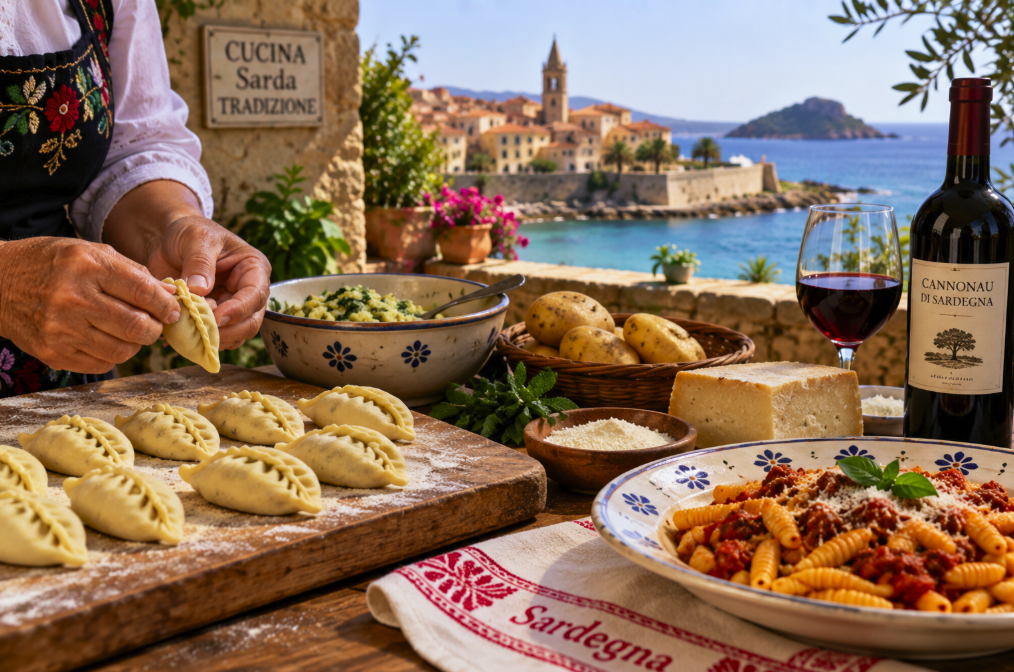
Culurgiones are often described in English as Sardinian ravioli, which is useful shorthand but misses their most distinctive feature. The filled pasta is closed by pinching the edges into an intricate pattern resembling an ear of wheat. In Ogliastra this hand-sealing technique is known for its visual connection with sa spighitta, the little ear of wheat, and making it neatly takes practice.
The protected Culurgionis d’Ogliastra IGP specification allows some variation rather than imposing one universal household recipe. The filling is based primarily on potatoes, which account for 60–80% of the filling under the specification, together with a mixture of cheeses. Permitted cheeses include local acidic cheese known as casu axedu and various sheep, goat and cow’s milk cheeses. Mint, garlic, basil and onion may also be used.
This flexibility matters because visitors can encounter noticeable differences from one Ogliastra town or family kitchen to another. One version may be strongly scented with mint, another more assertively cheesy or garlicky. The protected identity comes from the production area, ingredients, method and distinctive closure, not from the idea that every cook must produce an identical filling.
A practical culurgiones recipe for home cooks
For an approachable home version inspired by the classic Ogliastra combination, prepare a firm pasta dough with durum-wheat semolina, some wheat flour, water, salt and a little extra-virgin olive oil. For the filling, boil floury potatoes until tender, mash them thoroughly and combine them with grated pecorino, fresh mint, a little garlic and olive oil. Let the filling cool before assembling the pasta.
Roll the dough thinly and cut it into small circles. Place a modest amount of potato filling in the center of each one. Hold the pasta in one hand and pinch alternating edges together with the other, working progressively along the opening until the characteristic wheat-ear seam closes the parcel. This is the difficult part: overfilling makes the pasta much harder to seal.
Boil the finished culurgiones gently in salted water. A classic way to serve them is with a straightforward tomato sauce and grated Sardinian pecorino. The IGP product information also documents other preparations, including versions with bottarga and extra-virgin olive oil as well as fried or roasted interpretations. In other words, tomato sauce is traditional, but it is not the only legitimate way Sardinians eat them.
Home cooks outside Sardinia should also be clear about terminology. A homemade potato-and-pecorino stuffed pasta can follow the style of culurgiones, but the protected name Culurgionis d’Ogliastra IGP refers to pasta produced according to the specification within the defined Sardinian production area.
Where to try culurgiones in Sardinia
Ogliastra is the obvious destination if the pasta itself is part of the reason for the trip. Towns and villages around the central-eastern side of Sardinia regularly feature culurgiones in restaurants, agriturismi, festivals and traditional-food events. Girasole’s official 2026 tourism material, for example, identifies culurgiones and their recognizable wheat-ear closure as one of the area’s essential gastronomic specialties.
Travelers can also look around Tortolì, Lanusei, Bari Sardo and Baunei. Current regional event programs continue to include live demonstrations of traditional culurgiones preparation and hand stitching, which can be more illuminating than simply ordering a plate. The exact restaurant or festival calendar changes through the year, so checking local tourism and event information for the dates of a trip is preferable to treating a single restaurant recommendation as permanent.
What are malloreddus?
Malloreddus are small pieces of durum-wheat pasta, ridged and slightly curled so that sauce collects in their grooves and hollow. Outside Sardinia they are frequently sold as gnocchetti sardi, although they are pasta rather than potato gnocchi.
Traditionally, small pieces of dough were pressed and rolled against a textured surface such as a reed sieve. Modern home cooks often use a ridged gnocchi board. The dough itself can be remarkably simple: durum-wheat semolina, water and salt, with saffron appearing in some recipes.
The best-known preparation is malloreddus alla campidanese, associated with Campidano in southern Sardinia. A classic sauce combines fresh sausage, tomato, onion and saffron, with grated Sardinian pecorino added when the pasta is served. The ridges are not decorative: their practical purpose becomes obvious when they hold the rich sausage-and-tomato sauce.
Where to eat malloreddus
For malloreddus alla campidanese, southern Sardinia is the natural place to start. Cagliari and the wider Campidano area are particularly appropriate because the dish is rooted in this part of the island. Traditional trattorias, agriturismi and restaurants serving regional Sardinian cooking are more useful targets than venues whose menus are dominated by generic Italian dishes.
Malloreddus are not confined to the south, however. They appear throughout Sardinia and at local food events in areas far beyond Campidano. The regional tourism program for Nuoro, for example, has included malloreddos among the traditional dishes served during food-and-wine events. The sauce may vary considerably, so visitors specifically wanting the classic version should look for the words alla campidanese.
Menus also change seasonally and restaurants close, reopen or change direction. Rather than promising that one establishment will always serve a particular pasta, ask locally for restaurants making traditional Sardinian first courses and check the current menu before traveling a long distance solely for one dish.
Two pastas, two different Sardinian stories
Culurgiones and malloreddus are useful reminders that Sardinian cuisine is regional even within the island. The first points travelers toward the mountain-and-coast territory of Ogliastra and a labor-intensive stuffed pasta whose hand closure is part of its identity. The second leads toward the grain-growing traditions of Campidano and a small semolina shape built to capture robust sauces.
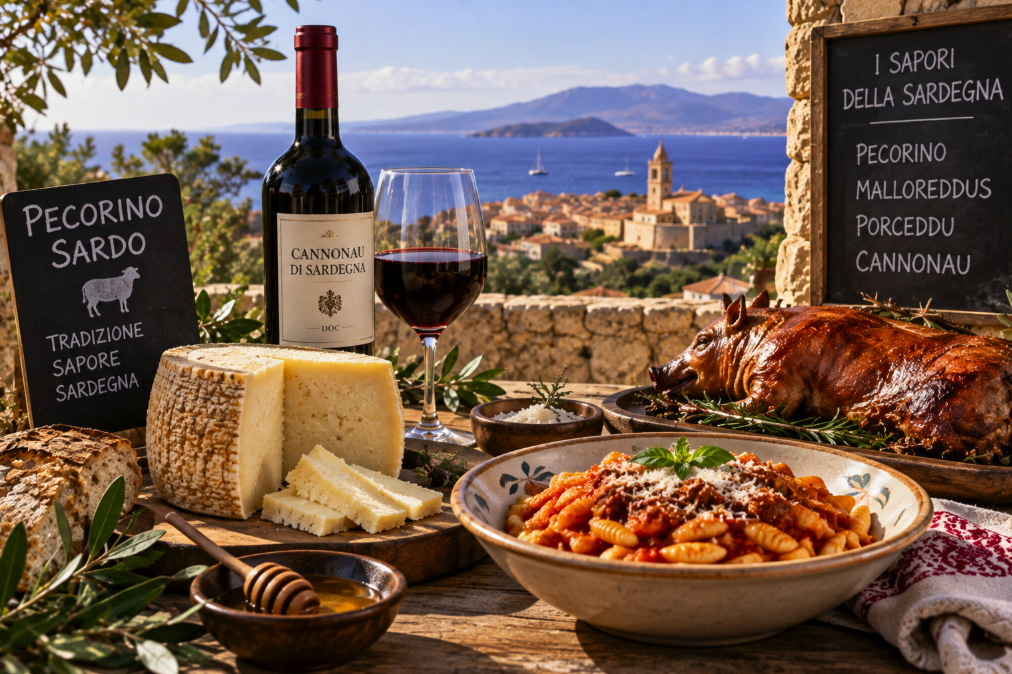
For a food-focused Sardinia itinerary, they also pair naturally with the products international visitors may already recognize. Pecorino is not merely something served on a cheese board; it becomes part of the filling or finishing of traditional pasta. Saffron is not only a specialty product; it perfumes malloreddus alla campidanese. And a glass of Sardinian wine makes more sense once it is sitting beside the dishes that developed in the same landscape.
So if culurgiones are the pasta that first catches the eye, start in Ogliastra and watch someone make the wheat-ear closure by hand. If malloreddus are the goal, look south toward Campidano and order them with sausage, tomato, saffron and pecorino. Neither requires a fine-dining setting to be memorable. Their appeal lies in something more characteristic of Sardinia: simple ingredients transformed by place, technique and generations of repetition.