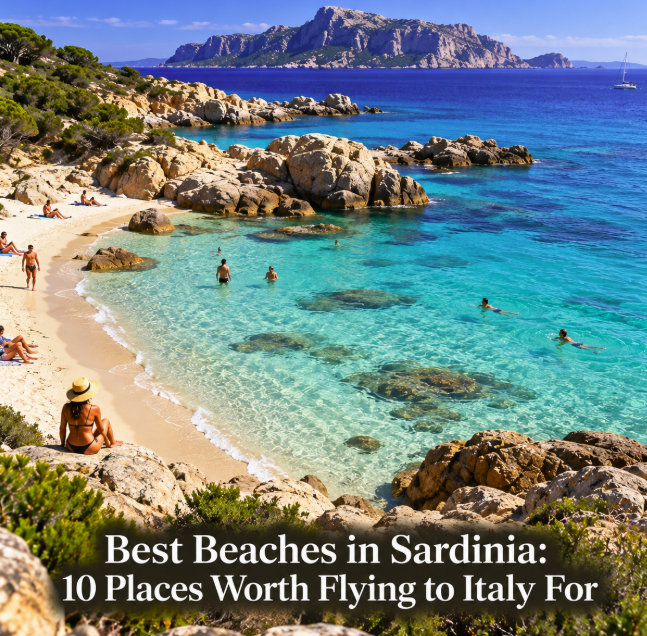
Sardinia has hundreds of beaches, so any list of ten is necessarily selective. The island ranges from shallow turquoise bays and powdery white sand to limestone coves reached on foot or by sea. For a first trip, the most useful shortlist is not simply ten photogenic names: it should show how different Sardinia’s coasts can be and what each beach requires from the traveler.
These ten places span the northwest, northeast, Gulf of Orosei and southern Sardinia. Some are easy family beach days; others demand reservations, a hike, a boat or careful planning. None needs exaggerated promises. The water and landscape do enough on their own.
1. La Pelosa, Stintino
La Pelosa is the Sardinian beach many first-time visitors recognize before they know its name. Near Stintino in the island’s northwest, it combines very shallow transparent water with pale sand and views toward the historic Torre della Pelosa and the island of Asinara.
Its fame comes with strict management. In 2026, the Municipality of Stintino continues to operate controlled access and reservations during the managed season, with the service running from May 15 to October 15. If La Pelosa is essential to your trip, check the current municipal booking system before driving there.
Best for: iconic scenery and shallow swimming. Know before going: reservations and local beach-protection rules matter.
2. Cala Goloritzé, Baunei
Cala Goloritzé is one of the defining landscapes of the Gulf of Orosei. Limestone cliffs plunge toward intensely clear water, while the beach is framed by the famous rock pinnacle that rises above the cove.
This is not a casual roadside beach. Access from land involves a substantial hike through rugged terrain, and the protected site uses controlled visitor access. Rules and booking arrangements can change, so check the Municipality of Baunei’s current information before setting out.
Boat excursions can show visitors the coastline, but protection rules govern how boats interact with the beach and its immediate waters. Do not assume a boat can simply land wherever it chooses.
Best for: hikers and dramatic limestone scenery. Know before going: prepare for the return hike, heat and limited services.
3. Cala Mariolu, Gulf of Orosei
A little farther along the Baunei coast, Cala Mariolu replaces broad sand with small pale pebbles and exceptionally transparent water. The surrounding cliffs make the cove feel much more enclosed than a typical Mediterranean beach.
Many travelers arrive by boat from ports such as Cala Gonone or Santa Maria Navarrese. Experienced hikers can reach parts of this coastline on demanding routes, but it should never be treated like an ordinary marked beach walk.
Best for: snorkeling and a boat-based Gulf of Orosei day. Know before going: summer boat traffic and visitor numbers can be high.
4. Cala Luna
Cala Luna sits beneath steep limestone walls between the territories of Dorgali and Baunei. Its broad crescent and large caves behind the beach create a very different setting from Cala Mariolu or Goloritzé.
It can be reached by sea or on foot, but the hiking option is a real excursion rather than a stroll in sandals. Carry sufficient water and assess the route, temperature and return plan before leaving.
Best for: combining beach time with hiking or a boat excursion. Know before going: the caves provide striking scenery but should not be treated as a substitute for normal heat and sun precautions.
5. Cala Brandinchi, San Teodoro
Cala Brandinchi, south of Olbia near San Teodoro, is known for pale sand and a long stretch of shallow aquamarine water. Tavolara rises offshore and gives the horizon a distinctive profile.
The beach is especially popular with families because of its shallows, but that accessibility also makes it one of northeastern Sardinia’s busiest summer destinations. Seasonal access and parking systems have been used in the San Teodoro area, so check the municipality’s current rules before visiting during peak season.
Best for: shallow water and families. Know before going: reserve or plan ahead when seasonal access controls apply.
6. Capriccioli, Costa Smeralda
Capriccioli shows why the Costa Smeralda became internationally famous. Granite boulders divide small sandy coves, Mediterranean vegetation reaches close to the shore, and the water shifts from clear green to deep blue over short distances.
It is much easier to reach than the remote coves of the Gulf of Orosei, making it a practical choice for travelers based around Arzachena, Porto Cervo or northeastern Sardinia. Its relatively compact beaches can feel crowded in high summer.
Best for: classic Costa Smeralda scenery without a hike. Know before going: arrive early in peak season and pay attention to parking restrictions.
7. Spiaggia del Principe
Another Costa Smeralda landmark, Spiaggia del Principe is a curved bay where granite, pale sand and clear water form one of northeastern Sardinia’s most recognizable combinations.
There is a walk from parking areas to the beach, so this is not quite a step-out-of-the-car stop. Footwear more secure than flip-flops can make the approach easier, particularly when carrying beach equipment.
Best for: travelers seeking the archetypal Costa Smeralda view. Know before going: parking availability and summer crowds can shape the experience.
8. Porto Giunco, Villasimius
In southeastern Sardinia, Porto Giunco offers a long sweep of pale sand near Villasimius, with turquoise sea on one side and the Notteri lagoon behind it. The surrounding protected coastal environment adds more than just a beach to the visit.
It works well for travelers based in Cagliari who want to explore the Villasimius coast by car. As elsewhere in Sardinia, wind direction matters: conditions can change significantly from one coast to another on the same day.
Best for: a scenic southern beach day with an easy resort-town base nearby. Know before going: parking and access are much busier in July and August.
9. Punta Molentis
Punta Molentis, also in the Villasimius area, has a narrow, highly photogenic shape with water visible on more than one side of the sandy strip. Granite and Mediterranean scrub frame the bay.
Its beauty and limited physical space have led to controlled visitor management. In 2026, access restrictions and capacity controls remain relevant, so this is another beach where turning up at midday in August without checking the rules is a poor strategy.
Best for: distinctive landscape and clear swimming water. Know before going: verify current access arrangements before departure.
10. Su Giudeu, Chia
On the southwest coast, Su Giudeu near Chia gives travelers something different from Sardinia’s tiny coves: a broad sandy beach, dunes, open horizons and shallow sections of clear sea. Its size makes it feel more expansive than many famous northeastern beaches.
The Chia area is a strong choice for travelers who want several beaches within the same part of the island rather than driving to a single headline destination. Wind can be decisive here, particularly when exposed conditions develop.
Best for: long beach days, sand and a southern Sardinia road trip. Know before going: check wind forecasts rather than judging conditions from sunshine alone.
How to choose the right Sardinian beach
If you have only a week, trying to visit all ten would turn the holiday into a driving challenge. Instead, choose a region and combine one or two famous beaches with smaller nearby alternatives.
From Alghero, La Pelosa and the northwest make sense. From Olbia, focus on Cala Brandinchi, Capriccioli, Spiaggia del Principe and the northeast. For the Gulf of Orosei coves, use a base such as Cala Gonone, Dorgali, Baunei or Santa Maria Navarrese depending on the itinerary. From Cagliari, Villasimius and Chia provide two very different coastal directions.
Wind is one of Sardinia’s most useful planning tools. A famous beach can be rough or uncomfortable on the wrong day while another coast is calm. Checking wind direction each morning often produces a better beach day than rigidly following a pre-booked list.
When to go
July and August provide the strongest summer atmosphere but also the greatest pressure on parking, accommodation and controlled-access beaches. June and September are attractive alternatives because swimming conditions are often good while some destinations are less intense than at the August peak.
Outside high summer, check whether seasonal beach bars, boat services, lifeguards and parking facilities are operating. A beautiful beach remains beautiful without a lido, but the practical experience can be very different.
Most importantly, treat Sardinia’s coast as a landscape rather than a collection of photo stops. Do not remove sand, shells or pebbles, respect dunes and protected areas, and follow local access rules. The beaches worth flying to Italy for are also the beaches most worth protecting.