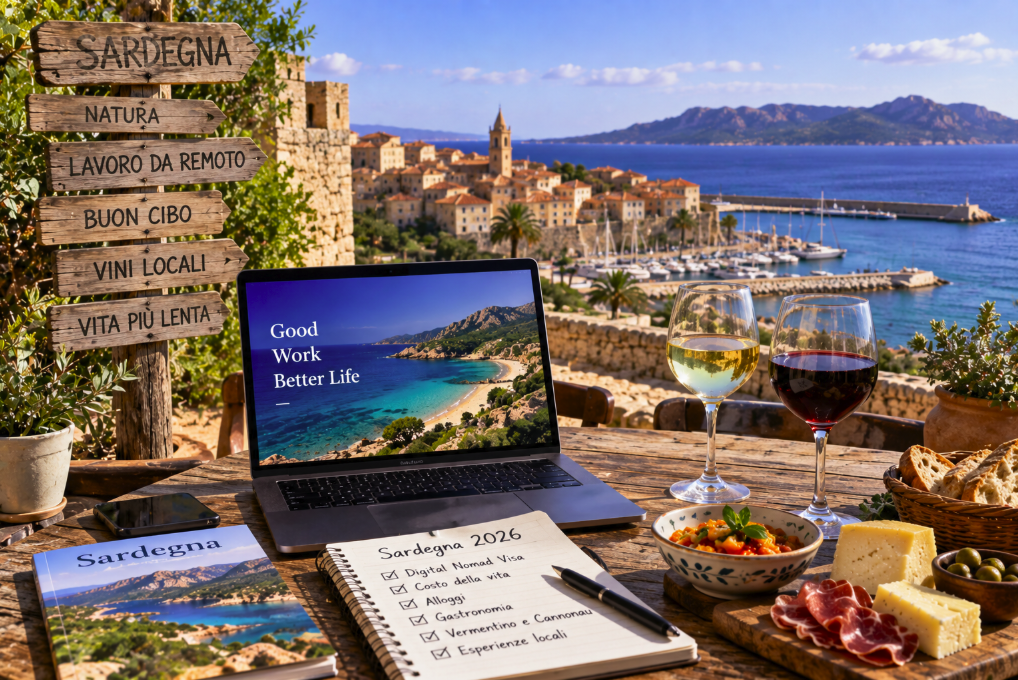
Sardinia can be attractive to digital nomads who want sea, nature and a slower rhythm without leaving the European Union. The experience, however, depends heavily on where you base yourself and whether you stay only for a season or try to live on the island year-round.
Cagliari offers the broadest combination of services, transport and year-round activity. Olbia is practical for the north-east, while Alghero combines a compact city with beaches and an airport. Smaller coastal towns can be beautiful but much quieter outside summer.
Visa and legal stay
Non-EU citizens should check the current requirements for Italy’s digital nomad or remote-worker visa and residence procedures before moving. Eligibility, income requirements, insurance and documentation can change, so official Italian consular sources should be used rather than relying on social media summaries.
EU citizens have a simpler framework but may still need local registration for longer stays.
Costs
Housing costs vary dramatically by season and location. Tourist areas can become expensive in summer, while longer winter rentals may offer better value. Cagliari tends to provide the widest rental market, while Costa Smeralda locations can be significantly more expensive.
Groceries and everyday services are generally easier to manage than seasonal accommodation costs. A car can add expense but may be valuable outside major cities.
Internet and daily life
Fiber and fast mobile connections are available in many populated areas, but coverage should be checked before renting a rural property. Do not assume that a beautiful countryside house has the same connectivity as an apartment in Cagliari.
The strongest reason to work from Sardinia is lifestyle: beaches before or after work, hiking, local food and a slower pace. The main trade-offs are seasonality, transport and fewer big-city services. Choosing the right base matters more than choosing the most famous postcard location.
